
|
Getting your Trinity Audio player ready... |
Cable ties may be small components, but they play an important role in keeping cables, wires and other components securely organised. From electrical panels and industrial machinery to infrastructure and outdoor installations, the right cable tie can make cable management safer, cleaner and more dependable.
With different materials, designs and performance requirements available, selecting the right product is only part of the process. It is equally important to choose a reliable cable tie manufacturer in India that can provide consistent quality, suitable specifications and dependable supply.
Understanding the available options can help buyers make a more informed decision.
Cable ties are fastening devices designed to bundle, secure and organise cables, wires, hoses and other components. Once installed, they help prevent loose wiring, reduce clutter and keep installations organised.
Although commonly associated with electrical cable management, cable ties are used across industrial equipment, manufacturing plants, infrastructure, automotive systems, telecommunications and many other applications.
The material and construction of a cable tie determine its strength, durability and suitability for different operating environments.
There is no single cable tie suitable for every application. Different environments require different designs, materials and locking mechanisms.
Common Types of Cable Ties Used for Cable Management
Some commonly used types of cable ties include:
- Standard cable ties for routine bundling and cable organisation
- Releasable cable ties for installations that require adjustment or reuse
- Ball lock cable ties for secure fastening in industrial environments
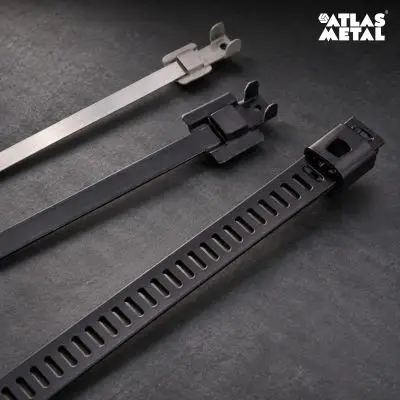
- Ladder-type cable ties for applications requiring controlled fastening
- Stainless steel cable ties for demanding environments where additional strength and durability are required
The appropriate option depends on the installation conditions and the level of fastening performance needed.
How to Choose the Right Cable Tie for Your Application
Start by understanding what the cable tie will be expected to handle. Important factors include bundle diameter, required tensile strength, installation environment, temperature exposure and the possibility of contact with moisture or chemicals.
For temporary cable routing, a releasable design may be more practical. For demanding industrial or outdoor installations, a stronger metallic solution may provide better long-term performance.
Selecting according to application rather than simply size or price helps improve reliability.
Industrial cable ties are designed for environments where standard fastening solutions may not be sufficient. Industrial installations may involve heavy cable bundles, vibration, temperature variations, moisture or exposure to challenging operating conditions.
A suitable industrial cable tie should maintain a secure hold throughout the expected service period without loosening or failing prematurely.
Where Are Industrial Cable Ties Commonly Used?
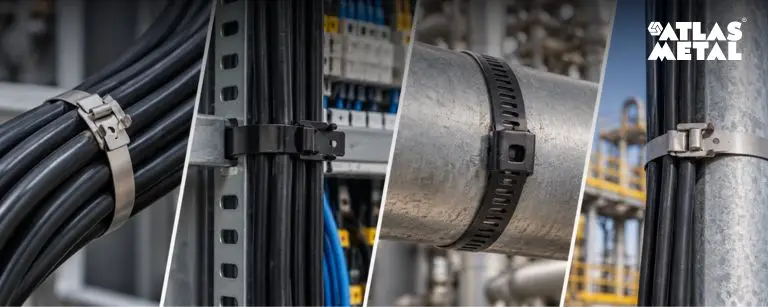
Industrial cable ties can be used across:
- Manufacturing facilities
- Electrical installations
- Control panels
- Machinery and equipment
- Telecommunications
- Infrastructure projects
- Renewable energy installations
- Marine and outdoor applications
Requirements can vary considerably between these applications, making correct material and size selection important.
Proper cable organisation is especially important in electrical installations. Electrical cable ties help route and bundle wires neatly, making systems easier to install, inspect and maintain.
Organised wiring can also make individual circuits and cable runs easier to identify during servicing or future modifications.
Factors to Consider When Choosing Electrical Cable Ties
When selecting ties for electrical cable management, consider:
- Cable bundle diameter
- Required tie length and width
- Tensile strength
- Operating temperature
- Indoor or outdoor installation
- Exposure to moisture or chemicals
- Required service life
- Need for permanent or releasable fastening
The cable tie should be selected according to the actual operating conditions rather than using one specification across every installation.
Stainless steel cable ties are generally preferred when an application requires higher mechanical strength or resistance to demanding environmental conditions.
They are particularly useful in industrial, outdoor, infrastructure and other installations where conventional plastic fastening solutions may not provide the required performance.
Depending on the application, stainless steel cable ties can provide resistance to corrosion, temperature variations and harsh operating conditions. Different locking mechanisms and coated or uncoated options can also be selected according to installation requirements.
The exact material grade and specification should always be matched to the environment in which the tie will be used.
When evaluating a cable tie manufacturer in India, price should not be the only consideration. Product consistency and technical capability are equally important.
Look for a manufacturer that offers:
- A suitable range of cable tie types and sizes
- Clear material and dimensional specifications
- Consistent manufacturing quality
- Products designed for different industrial environments
- Appropriate quality control processes
- Technical support for product selection
- Reliable production and supply capabilities
- Packaging suitable for domestic and export requirements
A manufacturer with experience across different industries is also better positioned to understand application-specific requirements.
For bulk and industrial buyers, consistency between batches is particularly important. A cable tie that performs well in one supply lot should maintain the same quality in future orders.
A cable tie manufacturer produces the product directly, while cable tie suppliers may source finished products from one or more manufacturers.
Working directly with a manufacturer can be beneficial when buyers need specific sizes, materials, large quantities, technical information or customised requirements. Manufacturers can also provide better visibility into product specifications and production capabilities.
Suppliers, on the other hand, may be useful when smaller quantities or multiple brands and product categories are required.
The right choice depends on purchasing volume, technical requirements and the level of product customisation needed.
Choosing the right cable tie starts with understanding the application. Material, size, strength, locking mechanism and operating environment should all be considered before making a selection.
The same attention should be given when choosing a cable tie manufacturer in India. A reliable manufacturing partner should provide consistent product quality, suitable technical specifications and dependable supply for both standard and demanding applications.
By selecting cable ties according to actual operating requirements and working with an experienced manufacturer, businesses can build safer, more organised and more reliable cable management systems.
Common types include standard, releasable, ladder-type, ball lock and stainless steel cable ties. Each type is designed for different fastening and cable management requirements.
Consider bundle diameter, tensile strength, material, installation environment, temperature, moisture exposure and whether the tie needs to be permanent or reusable.
Industrial cable ties are used to secure cables, wires and components in manufacturing equipment, electrical systems, telecommunications, infrastructure, machinery and other demanding installations.
Stainless steel cable ties are suitable when higher strength, durability or resistance to demanding environmental conditions is required, particularly in industrial and outdoor applications.
Evaluate the manufacturer’s product range, material specifications, quality control, manufacturing capability, technical support, supply capacity and ability to meet your application requirements.