

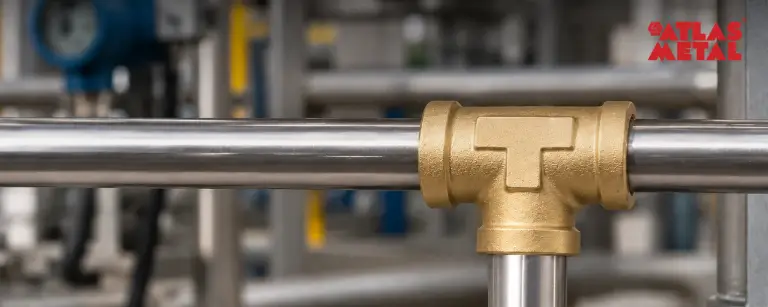
Brass components are widely used in electrical, plumbing, automotive and industrial applications because of their machinability, strength and corrosion resistance. Yet producing consistent components in brass requires tight control over material, tooling, casting, forging, machining and finishing. For buyers comparing brass manufacturers in India, understanding these challenges helps evaluate quality and production capability.
Maintaining Dimensional Accuracy in Precision Brass Components
Small deviations in diameter, thread profile or tolerance can affect assembly and performance. Tool wear, machine variation and inconsistent settings are common causes, especially in high-volume production.
Managing Brass Material Quality and Alloy Consistency
Brass grades contain different proportions of copper, zinc and other elements. Inconsistent composition can affect machinability, strength and corrosion behaviour, making dependable brass material suppliers important.
Preventing Porosity and Internal Defects During Casting
Poor melt control, trapped gases and unsuitable pouring conditions can create porosity or internal cavities that weaken cast components or affect leak-tight applications.
Controlling Cracking During Forging and Machining
Incorrect forging temperature, excessive deformation, residual stress or unsuitable machining parameters can cause cracking. Process settings must match the alloy and component geometry.
Preventing Surface Defects and Plating Issues
Scratches, tool marks, contamination and poor preparation can affect appearance and plating adhesion. Cleaning and pre-treatment therefore require close control.
Avoiding Dezincification and Corrosion
Certain environments can selectively remove zinc from brass. Correct alloy selection and suitable protective finishes help reduce this risk.
Meeting RoHS and REACH Requirements for Lead-Free Brass
Export-oriented components may need to meet market- and application-specific chemical requirements. Under the current EU RoHS framework, an exemption permits copper alloys containing up to 4% lead by weight until 30 June 2027, while REACH can create communication and notification obligations when Candidate List substances exceed applicable thresholds. Manufacturers should therefore confirm the requirements relevant to the final product and maintain appropriate documentation.
Reducing Material Waste and Production Costs
Excess machining allowance, rejected parts and inefficient handling increase scrap. Better process planning and recycling of suitable brass scrap can improve material utilisation.
Managing Bulk Orders and Production Deadlines
Large orders create pressure on machining, inspection, finishing and dispatch. Weak scheduling can result in inconsistent quality or delayed deliveries.
Improving Dimensional Accuracy Through Process Control
Standardised settings, calibrated measuring instruments, preventive maintenance and regular in-process inspection help maintain tolerances across batches.
Selecting Quality Brass Alloys and Reliable Raw Materials
Manufacturers should source verified materials, check alloy composition and maintain traceability. Consistent inputs make later processes more predictable.
Optimising Casting, Forging and Machining Processes
Controlling melt quality, forging temperature, tooling condition, cutting speed and feed rates helps reduce defects and improve production repeatability.
Applying Suitable Surface Treatments and Corrosion Protection
The finish should match the operating environment. Proper cleaning, plating preparation and inspection support consistent appearance and protection.
Reducing Material Waste Through Efficient Production Planning
Near-net-shape production, optimised cutting plans, controlled machining allowances and scrap monitoring can reduce unnecessary material loss.
Strengthening Quality Control and Production Scheduling
Clear inspection stages, batch records, capacity planning and realistic dispatch schedules help manage bulk orders without compromising quality.
Using CNC Machines for Precision Brass Components
CNC machining improves repeatability for complex dimensions, threads and profiles while supporting consistent batch production.
Integrating Manufacturing Processes from Melting to Laser Marking
Integrated manufacturing can reduce handling between vendors and improve process visibility. Atlas Metal’s Jamnagar facility includes capabilities such as casting, extrusion, forging, CNC machining, conventional machining, testing, assembly and laser marking.
Implementing Quality Checks at Every Production Stage
Material checks, dimensional inspection and application-specific testing help identify deviations before dispatch. Atlas Metal lists equipment for spectro lab, hardness, torque, sealing, tensile, pull, impact and hydraulic testing among its quality-control capabilities.
Checking Manufacturing Capabilities and Quality Standards
A reliable brass components manufacturer in Jamnagar should demonstrate suitable machinery, inspection systems, process controls and relevant product experience.
Evaluating Customisation Options and Production Capacity
Buyers should confirm whether the manufacturer can handle custom drawings, special threads, finishes and repeat bulk quantities within required lead times.
Checking Material Traceability and Compliance Documents
Ask for relevant material certificates, inspection records and compliance documents when required, especially for export or regulated applications.
The Jamnagar brass industry has developed a strong ecosystem of machining, forging, casting, finishing and component manufacturing, making the region an important sourcing base for domestic and international buyers. This ecosystem also strengthens the wider network of brass suppliers in India. Atlas Metal operates its manufacturing facility in Jamnagar, Gujarat.
How Industrial Brass Manufacturers Serve Electrical, Plumbing and Automotive Industries
Industrial Brass Manufacturers produce fittings, cable accessories, precision-turned parts, valves and other components for diverse sectors. A capable brass fitting manufacturer in India must combine material knowledge, dimensional control and scalable production to meet varying industry requirements.
Reliable brass manufacturing depends on controlling material quality, dimensions, processes, surface finish, compliance and production planning together. Buyers should evaluate not only price but also manufacturing depth, traceability, quality systems and capacity.
Choosing experienced brass manufacturers in India can help reduce quality risks, improve consistency and support dependable long-term supply across industrial applications.
Look for suppliers with controlled casting, machining, inspection and finishing processes, material traceability and proven capacity for repeat orders. Manufacturing infrastructure and quality-control capabilities should be evaluated before selection.
The best value comes from manufacturers that balance competitive pricing with consistent material quality, accurate machining, reliable inspection, customisation capability and dependable delivery.
Brass is commonly classified into alpha, beta and alpha-beta brasses based broadly on composition and microstructure. Each type offers different characteristics for manufacturing and industrial applications.
Brass is primarily an alloy of copper and zinc. Their proportions, along with other alloying elements where required, are adjusted to achieve specific mechanical, machining and corrosion-resistance properties.
Brass products are manufactured across several industrial centres in India, with Jamnagar, Gujarat, particularly well known for brass components, fittings, electrical accessories and precision-turned products.