Cable glands may be small components, but their role in an electrical installation is critical. They secure cables where they enter equipment, protect connections from external conditions, and help maintain a safe and organised cable system.
For industrial buyers, selecting the right product is only one part of the decision. Choosing dependable cable gland manufacturers is equally important. Product quality, dimensional accuracy, material selection, gland sizing, application knowledge, and supply consistency can directly influence the reliability of an installation.
This guide explains the important cable gland types, how to select the correct cable gland type and size, when double compression cable glands are required, and what industries should consider while choosing a manufacturer or cable gland supplier.
What Are Cable Glands and Why Are They Used?
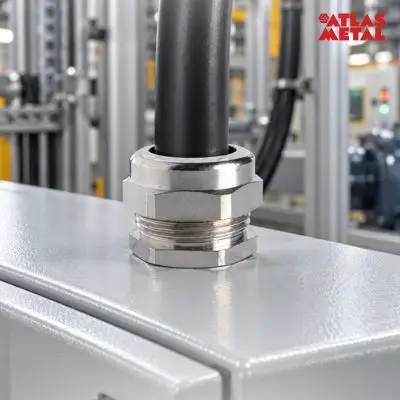
A cable gland is a mechanical component used to secure a cable at the point where it enters an electrical enclosure, control panel, motor, machine, or other equipment.
Depending on the design, cable glands can provide cable retention, sealing, strain relief, and protection against dust, moisture, vibration, and mechanical movement.
For armoured cables, suitable glands can also grip the armour and support electrical continuity. This is why selecting the correct electrical cable gland type and size is essential for industrial safety and long-term performance.
Common Cable Gland Types Used in Industrial Applications
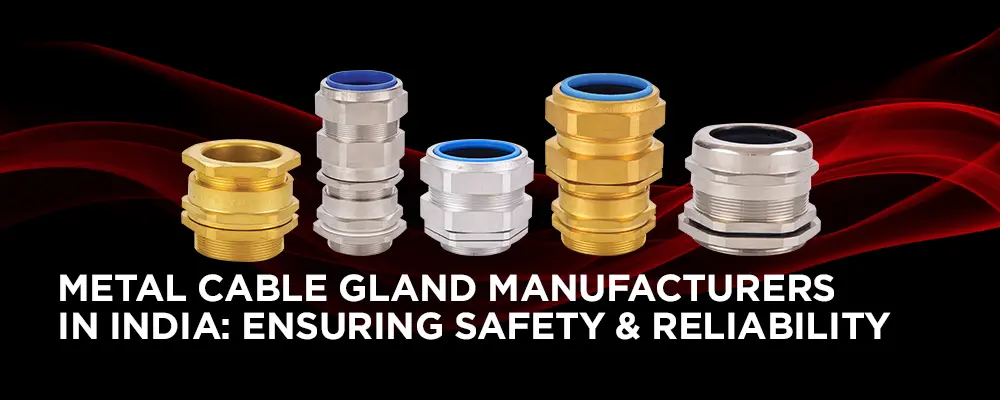
Different installations require different cable gland types. Some commonly used options include:
- Single compression cable glands
- Double compression cable glands
- A2 compression glands for unarmoured cables
- BW, CW and E1W glands for armoured cables
- Weatherproof cable glands
- Flameproof and hazardous-area cable glands
- IP-rated cable glands
- Marine and special-purpose cable glands
Atlas Metal’s ATCAB range includes multiple cable gland designs for armoured, unarmoured, indoor, outdoor and specialised industrial applications.
Factors That Determine the Correct Electrical Cable Gland Type and Size
There is no single gland suitable for every cable. The correct cable gland type and size should be selected according to:
- Cable outer diameter
- Armoured or unarmoured cable construction
- Armour dimensions
- Entry thread size
- Indoor or outdoor installation
- Exposure to dust, water or chemicals
- Temperature conditions
- Required IP protection
- Hazardous-area requirements
- Applicable standards and approvals
The most important step is to match the gland’s cable clamping range with the actual cable dimensions. Manufacturers normally provide size charts to simplify this process.
Common Mistakes to Avoid When Choosing Cable Gland Sizes
One of the most common mistakes is selecting a gland only by cable conductor size. The electrical cable gland type and size should instead be based on the cable’s actual construction and dimensions.
Other mistakes include choosing an incorrect thread, ignoring armour dimensions, using indoor glands outdoors, and selecting a gland without checking the required IP or hazardous-area rating.
Good cable gland manufacturers provide clear technical data to help customers avoid these problems.
Benefits in Harsh Industrial Environments
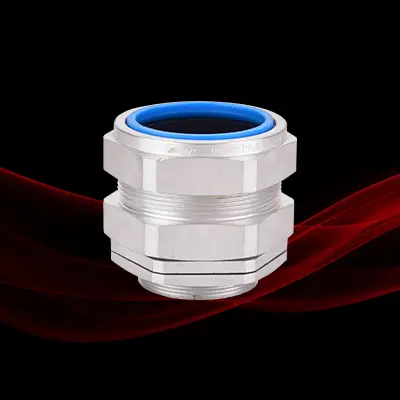
Double compression cable glands are generally selected for armoured cables used in environments where additional sealing and cable retention are required.
Unlike simpler gland designs, double compression arrangements provide compression at more than one point of the cable assembly, depending on the gland design. This can improve cable support, sealing, and protection in demanding installations.
ATCAB’s Double Compression Weather and Flame Proof Glands, for example, are designed for armoured cables and applications where weather or flameproof protection is required.
Industries That Require Double Compression Cable Glands
Double compression cable glands are commonly considered for applications such as:
- Oil and gas facilities
- Petrochemical plants
- Power generation
- Heavy manufacturing
- Process industries
- Outdoor electrical infrastructure
- Mining and heavy engineering
- Installations involving flammable gases or vapours
The exact gland should always be selected according to the equipment, cable, location classification, and required certification.
Reliable cable gland manufacturers should offer more than a broad product catalogue. Industrial buyers should evaluate:
Material quality: Brass, stainless steel, aluminium, or other materials should meet the requirements of the intended application.
Dimensional accuracy: Consistent machining is important for correct cable gripping, threading, and sealing.
Product range: Manufacturers should offer multiple cable gland types and sizes rather than relying on one general solution.
Technical documentation: Size charts, thread options, cable ranges, IP ratings, standards, and product specifications should be clearly available.
Quality control: Manufacturing and inspection processes should ensure consistency across large quantities.
Accessories: Locknuts, earth tags, washers, shrouds, adaptors, and reducers should be available where required.
Jamnagar, Gujarat has a long-established metalworking and brass-component manufacturing ecosystem. Choosing experienced cable gland manufacturers in Jamnagar can provide access to specialised manufacturing knowledge, established supply chains, machining capabilities, and product customisation.
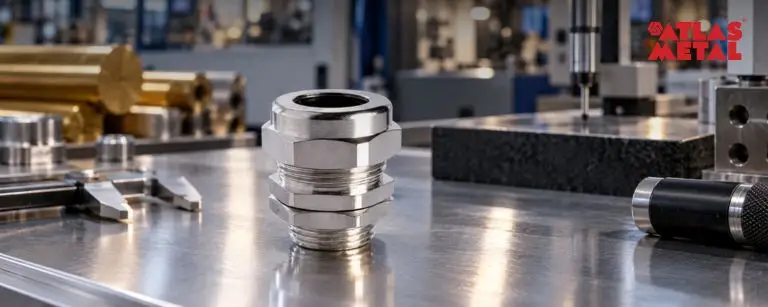
Atlas Metal operates its manufacturing facility in Jamnagar, with processes including casting, extrusion, forging, CNC machining, assembly, testing, packing, and dispatch supported in-house.
For buyers comparing cable gland manufacturers in Jamnagar, manufacturing capability, quality systems, technical support, and export experience should remain more important than price alone.
A dependable cable gland supplier should help simplify procurement, not create additional uncertainty.
Before placing an order, verify product specifications, available sizes, material, thread options, relevant certification, delivery capability, packaging requirements, and compatibility with accessories.
A good cable gland supplier should also be able to guide buyers toward the correct solution when cable specifications or operating conditions change.
Atlas Metal Industries began manufacturing brass electrical wiring and earthing accessories under the ATCAB brand in 1996. Today, its portfolio includes cable glands, earthing accessories, cable lugs, conduit fittings, cable cleats, cable ties, and related electrical components. The company operates a modern manufacturing facility in Jamnagar and serves national and international markets.
For businesses evaluating cable gland manufacturers, Atlas Metal Industries offers a broad product range supported by in-house manufacturing, technical specifications, multiple gland configurations, and solutions for different industrial applications.
Choosing the right cable gland begins with understanding the cable and the environment in which it will operate. However, choosing the right manufacturer is just as important.
Compare cable gland types, determine the correct cable gland type and size, assess whether double compression cable glands are required, and review the manufacturer’s material quality, technical support, manufacturing capability, and product consistency.
Working with experienced cable gland manufacturers such as Atlas Metal Industries helps industrial buyers build cable-management systems designed for safety, reliability, and long-term performance.
Common brass cable glands include A2, BW, CW, E1W, single compression, and double compression cable glands. Selection depends on whether the cable is armoured or unarmoured and the environment in which it will operate.
A cable gland size chart normally lists the gland size, thread size, cable clamping range, and other relevant dimensions. Compare the actual cable diameter and armour dimensions with the manufacturer’s chart before selecting the gland.
The correct armoured cable gland depends on the application. BW, CW, E1W, and certain double compression cable glands may be suitable for SWA cable installations depending on indoor, outdoor, sealing, and certification requirements.
An IP68 cable gland is designed for installations requiring a high level of protection against dust and water ingress when correctly installed as part of the rated system. It is commonly considered for demanding outdoor and industrial applications.
Flameproof cable glands should be selected where the equipment and installation are located in appropriately classified hazardous areas and the gland carries the required certification for that application.
Common cable gland accessories include locknuts, earth tags, IP washers, serrated washers, PVC or LSF shrouds, reducers, adaptors, and entry-thread seals.
Ask your cable gland supplier about cable compatibility, gland material, thread size, clamping range, IP rating, certifications, accessories, quantity requirements, and delivery schedule.
Double compression cable glands provide secure cable retention and additional sealing for suitable armoured cable installations. Their robust construction makes them particularly useful in demanding industrial, outdoor, and hazardous-area applications.