In marine, offshore, and industrial sectors, cables face some of the toughest conditions imaginable — constant exposure to moisture, saltwater, vibration, and extreme temperatures. When electrical systems operate in these environments, the risk of water ingress can cause corrosion, short circuits, and total system failure. This is where IP68 brass cable glands become essential.
The IP68 rating signifies the highest level of dust and water resistance in cable management systems. It ensures that industrial cable glands remain completely sealed even when submerged for extended periods. For industries like offshore drilling, shipbuilding, or marine engineering, this protection is critical for safety, efficiency, and compliance with international standards.
Among various materials, brass cable glands have earned a strong reputation for durability, resistance to corrosion, and compatibility with multiple cable types. When nickel-plated, they provide an added layer of protection against saltwater, oxidation, and chemical exposure. This makes them the ideal marine cable gland solution for long-term underwater performance.
As one of the leading brass cable gland manufacturers, Atlas Metal Industries offers high-quality IP68 waterproof cable glands that meet the stringent needs of offshore and submerged installations worldwide.
The term “IP68” comes from the Ingress Protection (IP) rating system, defined by international standards (IEC 60529). The two digits indicate specific levels of protection:
- The first digit “6” refers to complete protection against dust.
- The second digit “8” refers to protection against continuous immersion in water.
To achieve an IP68 cable gland certification, products undergo rigorous testing under controlled conditions. Typically, glands are submerged in water at specified depths for several hours. After testing, they are examined for moisture entry, corrosion, and sealing integrity.
This stringent evaluation ensures that every IP68 waterproof cable gland can reliably perform in harsh marine conditions. For industries that rely on underwater cables — whether for offshore oil rigs, submersible pumps, or undersea communication systems — such a rating offers the assurance of longevity and safety.
Testing also includes resistance to pressure, vibration, and temperature fluctuations. High-quality brass glands are built not only to resist water but also to withstand the constant mechanical stress found in offshore installations. The result is a product that maintains optimal sealing performance even under dynamic load and movement.
When choosing a marine cable gland, material selection is a key factor in determining performance and life span. Brass, an alloy of copper and zinc, offers a combination of strength, conductivity, and corrosion resistance that makes it ideal for both land-based and marine environments.
For offshore installations, where humidity and saltwater exposure are constant, nickel plating further enhances the gland’s durability. Nickel creates a protective barrier on the brass surface, preventing oxidation and surface degradation. This combination not only increases corrosion resistance but also ensures the gland retains its structural integrity for years, even in saline or submerged conditions.
Other advantages of brass IP68 cable glands include:
- Excellent electrical conductivity for grounding and shielding.
- Resistance to temperature variations, vibration, and impact.
- Compatibility with a wide range of cable sizes and insulation materials.
- Enhanced appearance and protection due to nickel finish.
Compared to plastic or aluminum glands, brass provides a far superior mechanical and sealing performance, making it the preferred material in industrial cable glands used in offshore, mining, and heavy engineering environments.
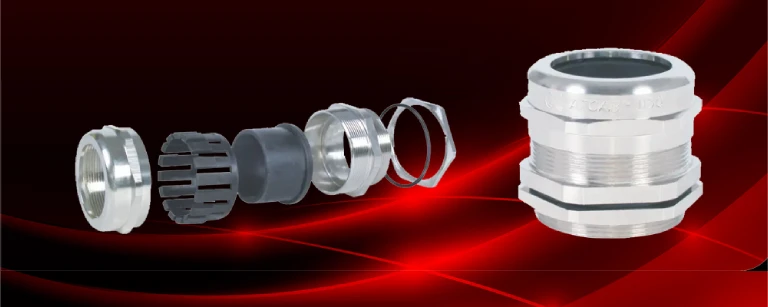
A waterproof cable gland achieves IP68 protection through precise engineering of its sealing components. The gland’s design integrates multiple barriers that prevent liquid ingress, even when submerged or pressurized.
Key sealing components include:
- Compression Seals (Inner Seals): These tightly grip the cable sheath to block any entry point for moisture.
- Outer Seals and Gaskets: These prevent water from entering between the gland body and enclosure.
- O-Rings and Washers: Made from elastomers like silicone, neoprene, or EPDM, they provide long-term flexibility and water resistance.
When assembled correctly, these seals create an airtight and watertight enclosure that withstands both immersion and mechanical strain.
At Atlas Metal Industries, each IP68 brass cable gland is designed for easy installation and consistent sealing performance. High-precision threading and corrosion-resistant surfaces ensure that glands maintain perfect alignment and pressure across all contact points.
By preventing moisture, dust, and gas infiltration, the gland extends the life of both cables and connected equipment — an essential feature for marine, oil & gas, and underwater operations.
IP68 waterproof cable glands are used in numerous marine and offshore installations where cables must stay sealed against water and salt exposure. Typical applications include:
- Shipbuilding: Electrical connections for navigation, lighting, and communication systems.
- Offshore Oil and Gas Rigs: Power and data transmission for drilling and monitoring equipment.
- Underwater Pumps and Motors: Cable terminations that must remain sealed during continuous submersion.
- Marine Renewable Energy Systems: Wind and tidal power installations where cables face constant moisture exposure.
- Port and Dock Equipment: Lighting, cranes, and control systems operating in saline air and splash zones.
In all these scenarios, IP68 cable glands serve as critical components that protect electrical integrity, prevent corrosion, and ensure operational reliability. Selecting the right cable gland size for each application is equally important to achieve proper sealing and mechanical stability.
Correct installation is essential to maintain an IP68 seal. Even the best industrial cable glands can fail if incorrectly installed. Here are some best practices:
- Match Cable Gland Size to Cable Diameter: Always ensure compatibility between the gland size and cable outer sheath for a secure fit.
- Use Proper Torque: Over-tightening can damage seals, while under-tightening can cause leaks. Follow manufacturer-recommended torque settings.
- Inspect Seals and O-Rings: Check for cracks, wear, or contamination before installation. Replace worn-out parts immediately.
- Avoid Cross-Threading: Misalignment can weaken the seal and reduce waterproofing.
- Regular Maintenance: Periodic inspection ensures the gland remains watertight. Look for signs of corrosion, wear, or vibration damage.
Atlas Metal Industries provides detailed technical documentation and size charts to guide customers in selecting and installing IP68 brass cable glands safely and efficiently.
As one of India’s most trusted cable gland manufacturers, Atlas Metal Industries offers a complete range of IP68 brass cable glands engineered to meet international quality standards.
When choosing the right model, consider:
- Cable gland size: Match to cable diameter and thread type.
- Application environment: Offshore, industrial, submerged, or indoor.
- Sealing material: Choose EPDM or neoprene for marine use.
- Thread type: Metric, PG, or NPT threads depending on your setup.
Atlas Metal’s catalog provides clear technical specifications for industrial cable glands, ensuring you find the perfect fit for your project. Each gland is precision-machined, nickel-plated, and tested for sealing efficiency, mechanical strength, and corrosion resistance.
With Atlas Metal, you don’t just get a waterproof cable gland — you get a product built on decades of manufacturing expertise and tested reliability.
In marine and offshore environments, protection from water ingress isn’t optional — it’s vital. IP68 brass cable glands provide that assurance with proven performance, strength, and longevity.
With their brass-nickel construction, advanced sealing mechanisms, and adherence to international IP68 standards, these glands safeguard critical cable connections under the most demanding conditions.
Atlas Metal Industries continues to lead as a trusted cable gland manufacturer, delivering precision-engineered solutions for marine, industrial, and offshore use. When you choose Atlas Metal, you’re choosing quality that stands the test of time — above and below water.
IP68 indicates total protection against dust and continuous immersion in water, making it ideal for marine cable gland and offshore applications.
They provide corrosion resistance, mechanical strength, and long service life, especially in industrial cable glands used in wet or saline conditions.
High-grade elastomers such as EPDM, silicone, and neoprene are used to ensure airtight, waterproof cable gland performance.
Generally, yes—if seals remain intact and threads are undamaged. However, replacement is recommended for critical offshore installations.
Brass offers a balance of durability and cost-efficiency. It’s more affordable than stainless steel but far more robust than plastic glands.
Sizes range from M16 to M63 depending on cable diameter. Always refer to cable gland size charts for precise selection.
Absolutely. Their waterproof cable gland design makes them suitable for outdoor electrical panels, factories, and construction sites.
Atlas Metal Industries is among the leading cable gland manufacturers offering certified industrial cable glands for marine and offshore sectors.