
ENQUIRE NOW ENQUIRE NOW ENQUIRE NOW

Tag Archives: cable tie manufacturer in india

cable tie manufacturer in india
Categories Cable Tie

How to Choose a Reliable Cable Tie Manufacturer in India

cable tie manufacturer in india

Cable ties may be small components, but they play an important role in keeping cables, wires and other components securely organised. From electrical panels and industrial machinery to infrastructure and outdoor installations, the right cable tie can make cable management safer, cleaner and more dependable.

With different materials, designs and performance requirements available, selecting the right product is only part of the process. It is equally important to choose a reliable cable tie manufacturer in India that can provide consistent quality, suitable specifications and dependable supply.

Understanding the available options can help buyers make a more informed decision.

What Are Cable Ties and Why Are They Important?

Cable ties are fastening devices designed to bundle, secure and organise cables, wires, hoses and other components. Once installed, they help prevent loose wiring, reduce clutter and keep installations organised.

Although commonly associated with electrical cable management, cable ties are used across industrial equipment, manufacturing plants, infrastructure, automotive systems, telecommunications and many other applications.

The material and construction of a cable tie determine its strength, durability and suitability for different operating environments.

Types of Cable Ties for Different Applications

There is no single cable tie suitable for every application. Different environments require different designs, materials and locking mechanisms.

Common Types of Cable Ties Used for Cable Management

Some commonly used types of cable ties include:

  • Standard cable ties for routine bundling and cable organisation
  • Releasable cable ties for installations that require adjustment or reuse
  • Ball lock cable ties for secure fastening in industrial environments
  • Ladder-type cable ties for applications requiring controlled fastening
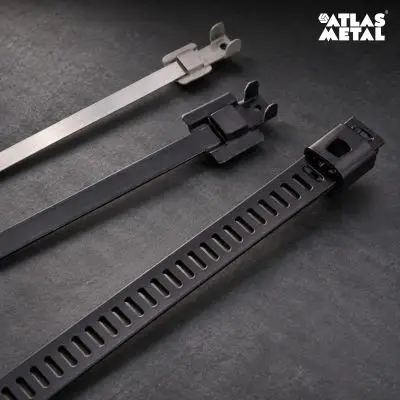
  • Stainless steel cable ties for demanding environments where additional strength and durability are required

The appropriate option depends on the installation conditions and the level of fastening performance needed.

How to Choose the Right Cable Tie for Your Application

Start by understanding what the cable tie will be expected to handle. Important factors include bundle diameter, required tensile strength, installation environment, temperature exposure and the possibility of contact with moisture or chemicals.

For temporary cable routing, a releasable design may be more practical. For demanding industrial or outdoor installations, a stronger metallic solution may provide better long-term performance.

Selecting according to application rather than simply size or price helps improve reliability.

Industrial Cable Ties for Demanding Applications

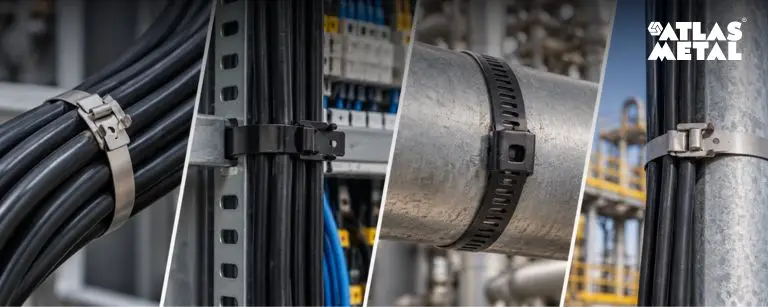
Industrial cable ties are designed for environments where standard fastening solutions may not be sufficient. Industrial installations may involve heavy cable bundles, vibration, temperature variations, moisture or exposure to challenging operating conditions.

A suitable industrial cable tie should maintain a secure hold throughout the expected service period without loosening or failing prematurely.

Where Are Industrial Cable Ties Commonly Used?

Industrial cable ties can be used across:

  • Manufacturing facilities
  • Electrical installations
  • Control panels
  • Machinery and equipment
  • Telecommunications
  • Infrastructure projects
  • Renewable energy installations
  • Marine and outdoor applications

Requirements can vary considerably between these applications, making correct material and size selection important.

Electrical Cable Ties for Safe Cable Management

Proper cable organisation is especially important in electrical installations. Electrical cable ties help route and bundle wires neatly, making systems easier to install, inspect and maintain.

Organised wiring can also make individual circuits and cable runs easier to identify during servicing or future modifications.

Factors to Consider When Choosing Electrical Cable Ties

When selecting ties for electrical cable management, consider:

  • Cable bundle diameter
  • Required tie length and width
  • Tensile strength
  • Operating temperature
  • Indoor or outdoor installation
  • Exposure to moisture or chemicals
  • Required service life
  • Need for permanent or releasable fastening

The cable tie should be selected according to the actual operating conditions rather than using one specification across every installation.

When Should You Choose Stainless Steel Cable Ties?

Stainless steel cable ties are generally preferred when an application requires higher mechanical strength or resistance to demanding environmental conditions.

They are particularly useful in industrial, outdoor, infrastructure and other installations where conventional plastic fastening solutions may not provide the required performance.

Depending on the application, stainless steel cable ties can provide resistance to corrosion, temperature variations and harsh operating conditions. Different locking mechanisms and coated or uncoated options can also be selected according to installation requirements.

The exact material grade and specification should always be matched to the environment in which the tie will be used.

How to Choose a Reliable Cable Tie Manufacturer in India

When evaluating a cable tie manufacturer in India, price should not be the only consideration. Product consistency and technical capability are equally important.

Look for a manufacturer that offers:

  • A suitable range of cable tie types and sizes
  • Clear material and dimensional specifications
  • Consistent manufacturing quality
  • Products designed for different industrial environments
  • Appropriate quality control processes
  • Technical support for product selection
  • Reliable production and supply capabilities
  • Packaging suitable for domestic and export requirements

A manufacturer with experience across different industries is also better positioned to understand application-specific requirements.

For bulk and industrial buyers, consistency between batches is particularly important. A cable tie that performs well in one supply lot should maintain the same quality in future orders.

Choosing Between Cable Tie Manufacturers and Cable Tie Suppliers

A cable tie manufacturer produces the product directly, while cable tie suppliers may source finished products from one or more manufacturers.

Working directly with a manufacturer can be beneficial when buyers need specific sizes, materials, large quantities, technical information or customised requirements. Manufacturers can also provide better visibility into product specifications and production capabilities.

Suppliers, on the other hand, may be useful when smaller quantities or multiple brands and product categories are required.

The right choice depends on purchasing volume, technical requirements and the level of product customisation needed.

Conclusion

Choosing the right cable tie starts with understanding the application. Material, size, strength, locking mechanism and operating environment should all be considered before making a selection.

The same attention should be given when choosing a cable tie manufacturer in India. A reliable manufacturing partner should provide consistent product quality, suitable technical specifications and dependable supply for both standard and demanding applications.

By selecting cable ties according to actual operating requirements and working with an experienced manufacturer, businesses can build safer, more organised and more reliable cable management systems.

FAQs

Common types include standard, releasable, ladder-type, ball lock and stainless steel cable ties. Each type is designed for different fastening and cable management requirements.

Consider bundle diameter, tensile strength, material, installation environment, temperature, moisture exposure and whether the tie needs to be permanent or reusable.

Industrial cable ties are used to secure cables, wires and components in manufacturing equipment, electrical systems, telecommunications, infrastructure, machinery and other demanding installations.

Stainless steel cable ties are suitable when higher strength, durability or resistance to demanding environmental conditions is required, particularly in industrial and outdoor applications.

Evaluate the manufacturer’s product range, material specifications, quality control, manufacturing capability, technical support, supply capacity and ability to meet your application requirements.
Double Compression Cable Gland
Categories Cable Gland

Understanding Double Compression Cable Glands: A Comprehensive Guide by Atlas Metal

Double Compression Cable Gland: An Introduction

Cable glands are crucial components in electrical installations, providing secure and reliable cable entries into equipment. Among the various types of cable glands, double compression cable glands are notable for their superior protection and performance features. Unlike single compression glands, double compression cable glands offer dual compression, enhancing both mechanical strength and environmental sealing. This blog, presented by Atlas Metal, a leader in manufacturing quality brass pipe fittings, delves into the specifics of double compression cable glands, comparing them with single compression types, and exploring their applications.

What is a Double Compression Cable Gland?

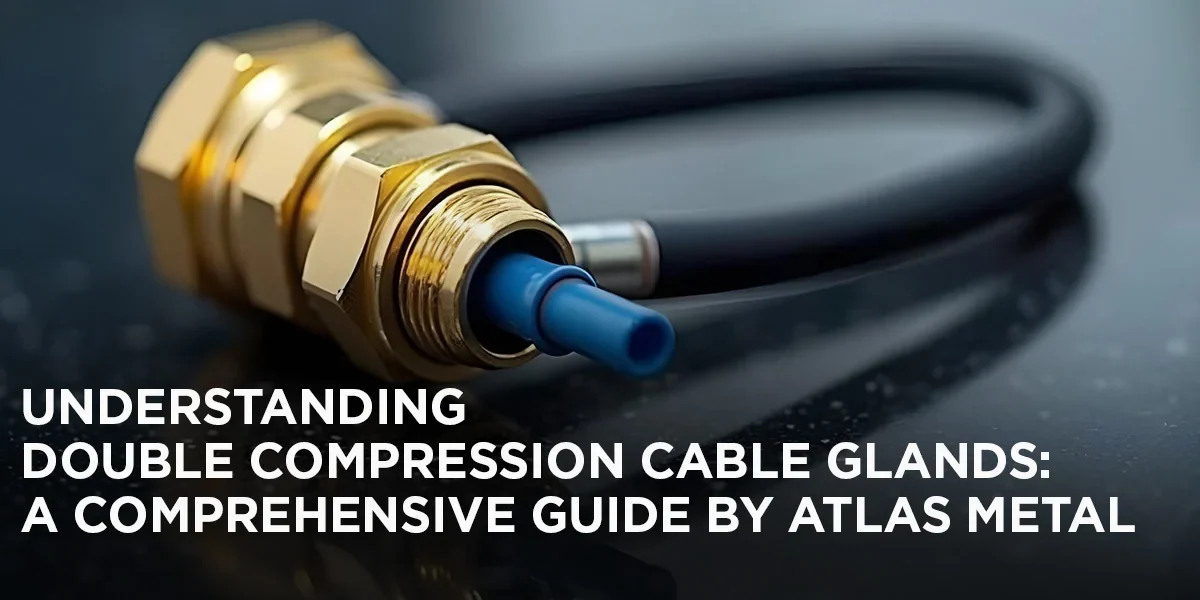
A double compression cable gland is an advanced device designed to secure and seal cables entering into electrical equipment or enclosures. Unlike single compression glands, which compress the cable at just one end, double compression cable glands apply compression at both the entry and exit points. This dual compression enhances the gland’s ability to withstand mechanical stresses and environmental conditions, making it ideal for more demanding applications.
Typically crafted from durable materials such as brass, double compression cable glands provide excellent resistance to corrosion and mechanical damage. This makes them suitable for use in various environments, from industrial settings to outdoor applications.

How Does a Double Compression Cable Gland Work?

The functionality of a double compression cable gland involves two stages of compression. Initially, when installed, the outer compression ring compresses the outer sheath of the cable against the gland body. This creates a seal that prevents dust, moisture, and other contaminants from entering the equipment.
The second stage of compression occurs inside the gland, where the inner compression ring compresses the inner insulation of the cable. This additional compression secures the cable firmly in place and enhances its resistance to mechanical stress. The combination of these two compression stages ensures a robust sealing mechanism, making double compression cable glands highly effective in protecting cables across various environments.

What is the Use of Double Compression Cable Gland?

Double compression cable glands serve multiple purposes in electrical installations, including:

  1. Protection Against Environmental Factors: They provide superior protection against dust, moisture, and chemicals, making them ideal for use in harsh environments.
  2. Mechanical Strength: The dual compression mechanism ensures that cables are securely held in place, reducing the risk of mechanical damage.
  3. Enhanced Safety: By offering a robust seal, double compression cable glands reduce the risk of electrical faults, ensuring the safety of both equipment and personnel.
  4. Compliance: These glands often adhere to international safety and performance standards, making them suitable for use in regulated industries.

Double Compression Cable Gland Applications

The versatility of double compression cable glands allows them to be used in a range of applications:

  1. Industrial Machinery: Secures cables in machinery and equipment exposed to harsh conditions.
  2. Oil and Gas: Provides protection for cables in oil rigs, refineries, and other facilities with high exposure to chemicals and extreme conditions.
  3. Mining: Ensures secure cable entry in mining equipment, safeguarding against dust and moisture.
  4. Automotive: Used in vehicles to secure and protect wiring systems from vibrations and environmental factors.
  5. Building and Construction: Ensures reliable cable connections in construction sites and commercial buildings.

Different Parts of Double Compression Cable Glands

A typical double compression cable gland consists of several key components:

  1. Gland Body: The main part of the gland housing the cable and providing sealing and compression.
  2. Outer Compression Ring: Compresses the outer sheath of the cable against the gland body, ensuring protection against dust and moisture.
  3. Inner Compression Ring: Compresses the inner insulation of the cable, securing it firmly in place.
  4. Locknut: Secures the gland to the equipment or enclosure, providing stability and preventing loosening.
  5. Sealing Washer: Ensures a tight seal between the gland and the equipment or enclosure, further enhancing protection.

Difference Between Single and Double Compression Gland

The primary differences between single compression and double compression glands are:

  1. Compression Points: Single compression glands compress the cable at one end, while double compression glands provide compression at both ends.
  2. Sealing Effectiveness: Double compression cable glands offer superior sealing effectiveness due to their dual compression, providing better protection against environmental factors.
  3. Mechanical Strength: Double compression glands deliver greater mechanical strength, making them suitable for more demanding environments.
  4. Application Environments: Single compression glands are typically used in less demanding environments, whereas double compression glands are preferred in industrial and harsh settings.

How Many Types of Cable Glands Are There?

There are several types of cable glands, each designed for specific applications and environments:

  1. Single Compression Glands: Suitable for less demanding applications requiring basic compression and sealing.
  2. Double Compression Glands: Ideal for harsh environments, offering enhanced protection and mechanical strength.
  3. Armoured Cable Glands: Used with armoured cables to provide additional protection and secure the cable armor.
  4. Unarmoured Cable Glands: Suitable for unarmoured cables, offering basic compression and protection.
  5. Explosion-Proof Glands: Designed for hazardous environments where there is a risk of explosions.
  6. Hygienic Glands: Used in industries with high hygiene standards, such as food and pharmaceuticals.

For inquiries, reach us at sales@atlasmetalind.com or call us at +91-288 2730 944. Visit our website at https://atlasmetalind.com to learn more about our products and services

FAQs

 A single compression cable gland provides basic compression and sealing for cables in less demanding environments.

A double compression cable gland typically includes a gland body, outer compression ring, inner compression ring, locknut, and sealing washer.

A double compressor gland, or double compression gland, provides compression at both ends of the gland, enhancing sealing and mechanical strength.

The key difference is that double compression glands compress the cable at both ends, offering better sealing and mechanical strength compared to single compression glands.

Yes, double compression glands can be used for unarmoured cables, providing enhanced sealing and protection.

A1 and A2 refer to different types or standards of cable glands, with A1 typically being a standard type and A2 a variant or specific design.

Brass cable glands offer durability, corrosion resistance, and excellent mechanical strength, making them ideal for a range of industrial and outdoor applications.