
|
Getting your Trinity Audio player ready... |
In electrical and industrial installations, cable glands play a crucial role in securing cables, protecting equipment, and ensuring safety. However, not every cable gland fits perfectly into every enclosure or panel opening. Differences in thread types, entry hole sizes, and cable dimensions often require additional components to achieve a proper fit. This is where cable gland adaptors and cable gland reducers become essential.
A correctly selected cable gland adaptor or cable gland thread reducer ensures compatibility between cable glands and equipment entries, maintaining mechanical strength, electrical safety, and environmental protection. Using incorrect or poorly matched fittings can lead to loose connections, cable damage, and compromised sealing.
Atlas Metal, a trusted manufacturer of brass cable gland accessories, offers precision-engineered adaptors and reducers designed for reliable performance across industrial environments. This guide explains what cable gland adaptors and reducers are, why they are used, available thread conversions, material advantages, and how to select the correct size for safe and efficient installations.
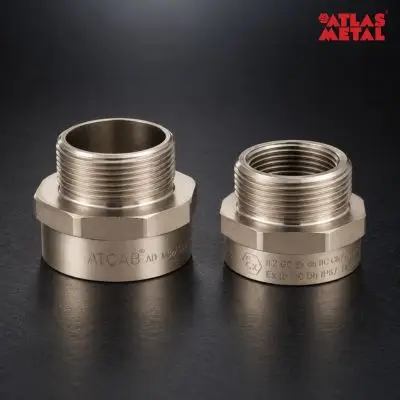
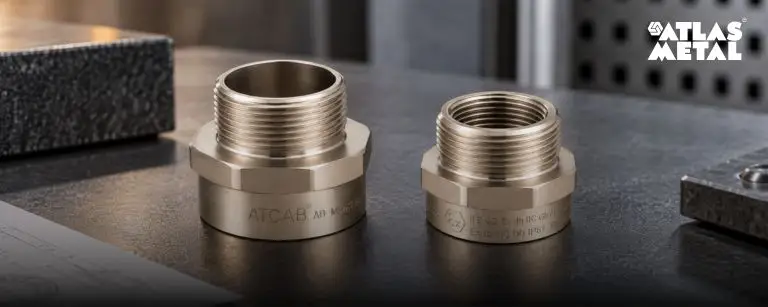
Cable gland adaptors and reducers are specialized fittings used to connect cable glands to enclosure entry holes when sizes or thread types do not match. Though they serve similar purposes, their functions are distinct.
Cable Gland Adaptors
A cable gland adaptor is used when the thread type of a cable gland does not match the thread type of the equipment or enclosure. For example, if an enclosure has a PG thread and the cable gland has a metric thread, a cable gland metric to PG adaptor is used to ensure compatibility.
Cable gland fitting adaptors allow smooth conversion between different thread standards such as Metric, PG, and NPT. These adaptors maintain proper alignment, ensure tight sealing, and prevent damage to threads during installation. A cable gland size adaptor is especially useful in retrofit projects where existing enclosures must be reused.
Cable Gland Reducers
A cable gland reducer is used when the entry hole size is larger than the cable gland size. The reducer decreases the opening size so that a smaller gland can be securely fitted. A cable gland thread reducer ensures proper tightening and maintains the mechanical integrity of the connection.
Both adaptors and reducers are essential brass cable gland accessories, helping installers achieve correct sizing without modifying panels or compromising safety.
Cable gland installations often face challenges due to differences in international standards, equipment variations, or design limitations. Adaptors and reducers address these challenges effectively.
One common reason for using a cable gland adaptor is mismatched thread standards. Equipment imported from different regions may use Metric, PG, or NPT threads. A properly selected adaptor ensures compatibility without reworking enclosures.
A cable gland reducer is used when the available entry hole is larger than required. Instead of replacing the enclosure, a reducer allows correct fitting of the cable gland, saving time and cost.
Using correct brass adaptor for cable glands and brass reducer for cable glands ensures durability, secure sealing, and long-term reliability. These fittings also help maintain ingress protection ratings and prevent cable strain, which is critical in industrial environments.
Metric to PG Adaptors
A cable gland metric to PG adaptor allows conversion between metric-threaded cable glands and PG-threaded enclosures. This is common in industrial panels where older PG standards coexist with modern metric glands.
Metric to NPT Adaptors
Metric to NPT adaptors are used when metric cable glands need to be installed in NPT-threaded equipment. These adaptors ensure secure fitting without thread damage.
PG to Metric / PG to NPT
PG to Metric or PG to NPT adaptors are widely used in system upgrades. They allow continued use of PG-threaded enclosures while transitioning to newer cable gland types.
NPT to Metric / NPT to PG
NPT to Metric or NPT to PG adaptors are commonly required in imported machinery and industrial control panels. These cable gland fitting adaptors ensure compatibility across global standards.
Strength & Durability
Brass offers excellent mechanical strength, making it ideal for adaptors and reducers used in demanding conditions. A brass reducer for cable glands resists deformation under tightening and vibration.
Accurate Thread Machining
Precision machining ensures accurate thread engagement. A brass adaptor for cable glands provides smooth installation and secure tightening, reducing the risk of leaks or loosening.
Electrical Safety
Brass offers good conductivity and grounding support, enhancing electrical safety. This makes brass cable gland accessories suitable for industrial electrical systems where safety is critical.
Step 1 – Identify Thread Type (Metric / PG / NPT)
First, determine the thread type of both the cable gland and the enclosure. This helps select the correct cable gland adaptor or reducer.
Step 2 – Match Entry Hole & Gland Size
Measure the enclosure entry hole and compare it with the cable gland size. If the hole is larger, a cable gland reducer is required. If thread types differ, use a cable gland size adaptor.
Step 3 – Check Material Requirements
Choose brass adaptors and reducers for durability and corrosion resistance, especially in industrial environments.
Step 4 – Align with Cable Diameter & Application
Ensure the adaptor or reducer supports the cable diameter and operating conditions. Proper sizing prevents cable damage and ensures long-term reliability.
Cable gland adaptors and reducers are widely used across industries. In control panels, they enable proper fitting of cable glands in standard and non-standard openings. In manufacturing plants, they support safe cable routing in machinery and automation systems.
Infrastructure projects, power distribution units, and outdoor installations also rely on brass cable gland accessories for secure and weather-resistant connections. Their versatility makes them essential components in electrical installations.
Using the correct cable gland adaptor or cable gland reducer ensures secure fitting, improved safety, and longer service life. Proper sizing prevents thread damage, reduces maintenance, and maintains ingress protection.
Correct adaptors and reducers also simplify installations and allow flexibility when dealing with mixed standards or retrofitting existing systems.
In addition to adaptors and reducers, Atlas Metal offers a range of brass cable gland accessories such as locknuts, earth tags, and sealing washers. These components work together to provide complete and reliable cable gland installations.
Cable gland adaptors and reducers are essential components for achieving correct sizing, compatibility, and safety in electrical installations. Whether addressing thread mismatches or size differences, the right cable gland fitting adaptor or cable gland thread reducer ensures secure and long-lasting connections.
Atlas Metal’s precision-engineered brass adaptors and reducers reflect the company’s commitment to quality and reliability. Choosing the right adaptor or reducer ensures efficient installation, improved safety, and dependable performance across applications.
A cable gland adaptor converts thread types to ensure compatibility between glands and enclosures.
A cable gland reducer is used when the enclosure entry hole is larger than the cable gland size.
Yes, brass offers strength, durability, and corrosion resistance.
Yes, adaptors allow conversion between Metric, PG, and NPT threads.
Identify thread type, entry hole size, material needs, and cable diameter.